

Forest Bathing
”I go to nature to be soothed and healed,
and have my senses put in order”
James Burroughs
Forest Bathing
Forest Bathing is a direct translation of the Japanese term Shinrin-Yoku (森林 浴). It means to “take in the forest atmosphere with all the senses” or literally to “forest bathe” (Li, 2018 and Miyazaki, 2018).
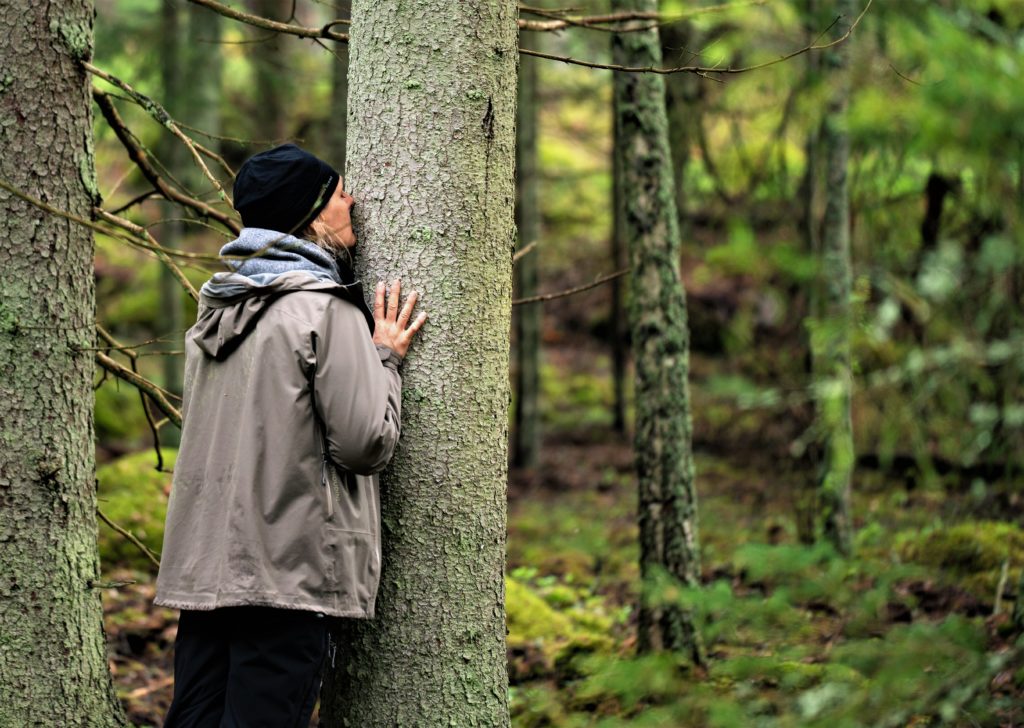
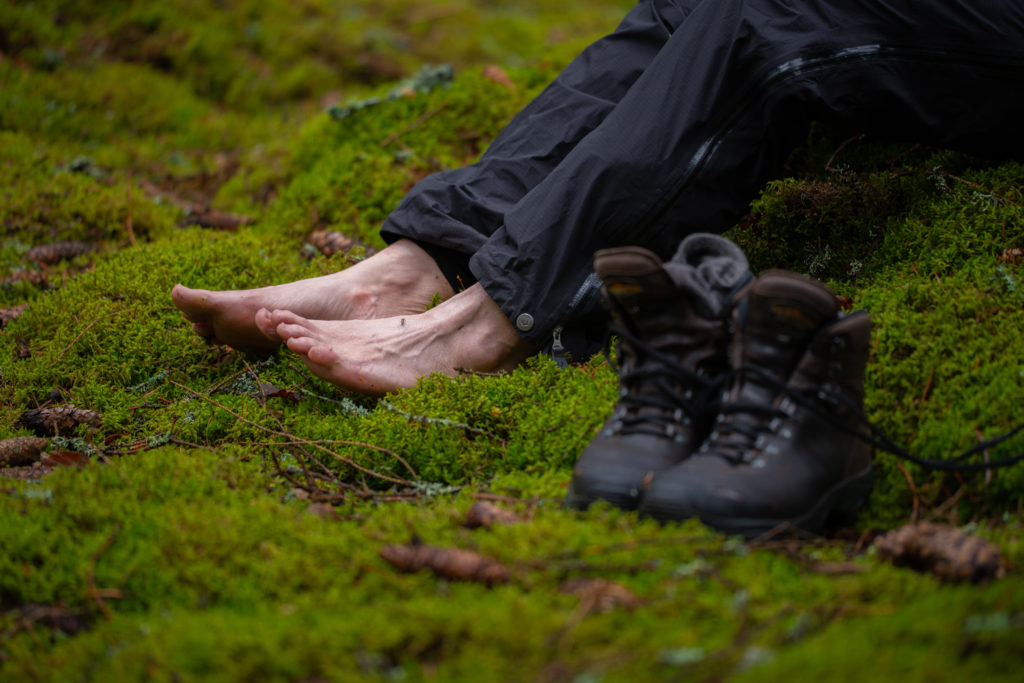
Forest bathing can be described as a very slow walk in a park or forest, with the senses open to natural experiences. We “bathe our senses in the forest athmosphere” when we allow ourselves to spend time in the forest, with our bodymind open to what may arise and our senses immersed in connection with the natural environment.
Background
Shinrin-Yoku, Forest Bathing has emerged as part of Japanese culture, where the human – nature connection is considered important to the well-being of both. When stress related health issues increased dramatically in the population during the early 1980s, the Japanese Ministry of Agriculture, Forestry and Fisheries, established forest parks for the urban population to visit. The term Shinrin-Yoku, Forest Bathing was introduced and research was established. Shinrin-Yoku guides were eventually introduced to offer people easy and pleasurable access to relaxation, therapeutic recovery and healing through presence and sensory contact with a living environment.
Forest Bathing in Scandinavia
Forest Bathing is spreading thrughout the world and is integrated into different cultures, thus interpreted and performed in slightly different ways. The Scandinavian Forest Bathing methodology and models, expressed as Eco Forest Therapy, is part of this development. It is firmly based in the Japanese as well as the American (ANFT) form of Forest Bathing and Forest Therapy. However, the theoretical and methodological base has undegone necessary changes, due to the need for academic and science based models, sustainability and recilience factors, cultural adaptions, and, naturally, matching guiding skills and hands-on practise. The Forest Bathing practise and training of Certified Forest Bathing Guides in Scandinavia, upholds an emphases on the physical and psychological benefits of a sensory re-connection to the natural environment, but shares the unique methodology, models and guiding skills development of Eco Forest Therapy. For more on Eco Forest Therapy, most welcome to click here!
